The 3-Video System That Grows a YouTube Channel Faster Than Posting Every Day
Most YouTube creators are posting more and growing less. Nearly 70% of all watch time now comes from algorithm recommendations — not search. Here's the 3-video system (Anchor + Search + Short) that beats daily posting every time.
The creator who posts every single day and the one who posts three strategic videos a week can have the same subscriber count after 12 months. The difference is: one of them is burnt out and earning a fraction of the income per view.
Which One?
Why This Matters Now
Nearly 70% of all YouTube watch time now comes from recommendations — not search, not direct navigation. The algorithm has one job: keep people on YouTube.
It does this by recommending content it trusts will hold viewers' attention. And it builds that trust not through upload frequency, but through watch time, retention rate, and click-through consistency.
The channels growing fastest in 2026 understand this shift. The ones stalling are still operating on the "more equals better" logic that YouTube quietly made irrelevant years ago.
The Frequency Myth That's Burning Creators Out
Ask most creators what the "right" upload schedule is and they'll say daily, or at minimum five times a week. Ask the algorithm and it will tell you something completely different.
Daily uploads sound disciplined. In practice, they produce rushed scripts, weak thumbnails, uninspired topics, and under-edited content — and the audience notices every single time. A video that fails to hold attention past the first 30 seconds doesn't just underperform. It actively works against the channel by telling the algorithm that your content doesn't retain viewers. That signal takes time to recover from.
The data is clear: channels with consistent, quality schedules see 89% higher audience retention and 234% more video recommendations than those posting daily without structure. Consistency wins. Volume alone does not.
💡
*70%* — of all YouTube watch time in 2026 comes from algorithmic recommendations, not search or direct navigation. The algorithm distributes content it trusts. It builds that trust through retention data, not upload count.
What the Algorithm Actually Rewards in 2026
Three signals determine whether YouTube pushes your video or buries it:
Signal 1 — Retention Rate (not raw watch time). 👇
A 7-minute video watched at 85% average view duration outranks a 15-minute video watched at 50%. The algorithm has shifted from measuring total minutes watched to measuring the percentage of the video people complete. Your job is not to make longer videos. It's to make videos people can't stop watching.
Signal 2 — Click-Through Rate (CTR). 👇
If your thumbnail and title don't earn the click, nothing else matters. The average CTR across YouTube sits between 2–10%. The channels growing fastest consistently hit 5–8% on their best content. CTR is not about clickbait — it's about making a promise so relevant and compelling that the right viewer cannot scroll past it.
Signal 3 — Topical Consistency. 👇
YouTube's recommendation engine categorises channels by topic. When your content covers tightly clustered subjects, the algorithm builds a clearer audience model and pushes your videos to viewers who've already watched similar content. One-off viral topics might spike a channel — but topical consistency is what compounds it.
The 3-Video System: One Week, Three Jobs
Every video you publish should have a specific job. Most creators never define what that job is — they make content and hope the algorithm figures it out. The 3-video system eliminates that ambiguity.
👇 Video 1 — The Anchor: Long-Form Authority Content (12–20 min)
Job: Establish credibility. Convert new viewers into subscribers. Rank in your topic cluster for suggested traffic.Format: Evergreen. Structured. Your expertise on full display.Example topics: "The complete system for [outcome]", "Why most [audience] get [topic] wrong", "Everything you need to know about [topic] in 2026".Frequency: Once per week. Non-negotiable. This is the backbone of channel authority.
👇 Video 2 — The Search Video: Keyword-Targeted Content (8–15 min)
Job: Capture intent-based search traffic. Build a library of videos that find new viewers on autopilot — long after publishing.Format: Answers a specific question your audience is actively searching. Title starts with "How to", "Why", or a direct question.Example topics: "How to [specific outcome] without [specific obstacle]", "The real reason [common problem] keeps happening".Frequency: Once per week. Optimised for YouTube search. This is your long-term growth engine.
👇 Video 3 — The Short: Short-Form Discovery Content (60–90 sec)
Job: Get discovery. Bring in new viewers who don't yet know you exist. Funnel them toward long-form.Format: Pull a sharp insight, framework, or hook from one of your long-form videos. Or create a standalone insight that delivers value in under a minute.End with: "Full breakdown in my channel — link in bio" or "I made a complete video on this — check it out."Frequency: Once per week minimum. Creators posting Shorts alongside long-form see 3× faster channel growth than single-format creators.
Why This System Works When Random Posting Doesn't
The 3-video system works because each video feeds a different part of the algorithm's recommendation model simultaneously. Your Anchor builds topical authority. Your Search Video captures active demand. Your Short drives discovery traffic from outside your existing audience. Together, they create three separate growth vectors instead of one — and they compound on each other.
When a new viewer finds you via a Short and watches the related long-form, the algorithm notes that behaviour. When a search viewer discovers your Search Video and then watches your Anchor, the algorithm notes that too. These patterns signal that your channel is worth recommending across multiple surfaces — which is exactly how a channel crosses from plateau to compound growth.
3 Actions To Do This Week!!
1️⃣ Audit your last 10 videos.
Categorise each one as Anchor, Search, or Short. If they don't fit any category, they were probably produced without a clear job — and that's the first thing to fix. The system starts with intention, not production.
2️⃣ Plan one week using all three types.
Write down one Anchor topic, one Search topic (start with a question your audience keeps asking), and one Short idea (pull a single insight from one of the above). That's your first 3-video week.
3️⃣ Check your retention on your last 5 long-form videos.
If average view duration is below 45%, the script structure or opening hook needs work before you post more content. Fix the foundation first. Volume on a weak foundation makes the problem bigger, not better.
🎯 Free — Claude Cowork Prompt : Build your first 3-video week from scratch — all three types planned in one session
You are a YouTube growth strategist who specialises in small channels, not viral hacks.I run a YouTube channel about: [your niche/topic]My target audience is: [describe them — level, interests, pain points]My channel size: [number] subscribersMy goal: Grow faster with fewer videos using a 3-video weekly system.Using this, plan ONE WEEK of content built around the 3-video system:Anchor Video (Long-form Authority)Provide a high-value title + topicGive a detailed outline/structureExplain why this builds authority for my channelSuggest retention tactics (hooks, pattern interrupts, visuals)Search Video (SEO-Optimised)Provide a keyword-targeted titleSpecify the exact search phrase to targetGive a short outline that directly answers the queryExplain why this video can rank and pull views consistentlyShort (45–60 sec, Discovery-Focused)Provide the hook + core messageSpecify which part of the Anchor/Search video it should be clipped fromSuggest a visual + text-on-screen strategy for high retentionConstraints:All ideas must be realistic for my current audience size.Focus on building authority + discoverability.Avoid generic ideas — give specific, concrete angles I can film this week.End with a one-paragraph execution plan for the week.
Founders & SYstems - community
Stop figuring it out alone!Join Founders & Systems for proven Claude skills, Systems, Tutorials, Step by Step Guides, 1:1 Coaching, Courses as well as Live events. Saves you Time, Creates Clarity and Makes you Money.
I Studied 50 Founder YouTube Channels. The Ones Who Convert All Do This.
Half of 50 creator YouTube channels grew subscribers. Only 8 produced inbound. The pattern in the 8 was identical — and almost nobody else was doing it. Here's the 4-layer framework.
paid only
Content Systems
10-Minute Content Machine: How Creators Turn One Idea Into Five Pieces of Content.
94% of top marketers repurpose content. Only 35% of creators actually do it. Here's the 5-format content machine and 10-minute batch workflow that lets founders produce a full week of content from one idea.
members only
Personal Branding
The One-Person Studio: Pro-Level YouTube Content With an iPhone, CapCut, and Claude
A complete one-person YouTube system for founders — from idea to published using just an iPhone, CapCut, and Claude. No team, no expensive kit, no agency. One filming session a week. Under £150 to build.
paid only
YouTube
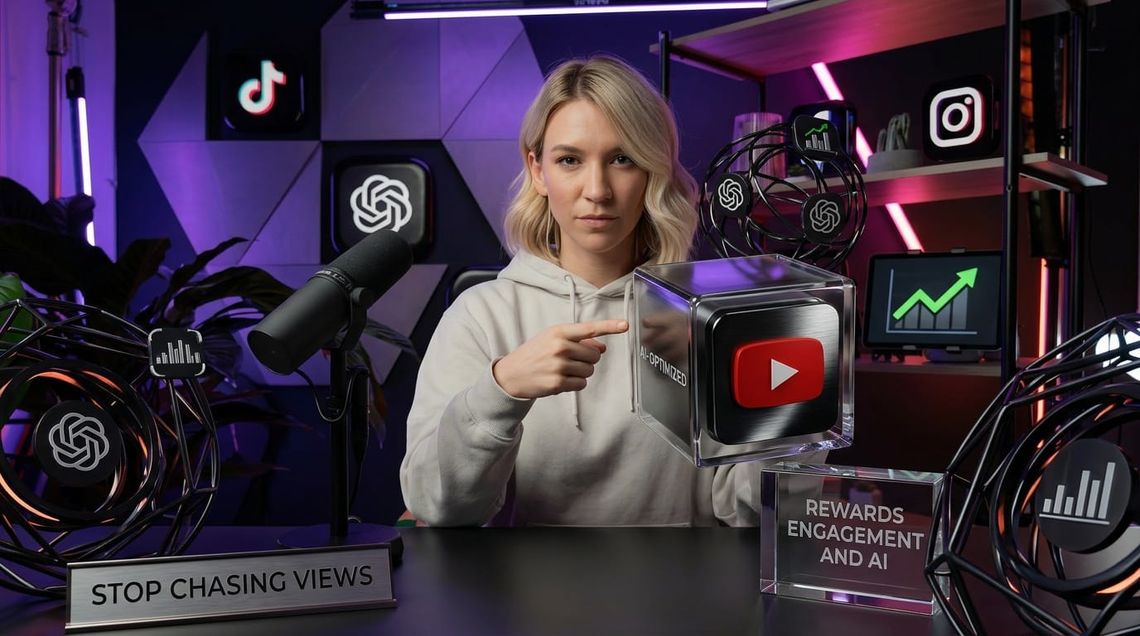
Stop Chasing Views. The YouTube Algorithm Now Rewards Something Completely Different. (Copy)
Stop Chasing Views. The YouTube Algorithm Now Rewards Something Completely Different.