

#NFF · Stop Creating Content. Start Capturing It.
If you're sat at a blank doc on Tuesday morning trying to invent something to say, you've already lost the week. The fix isn't another prompt. It's a different posture. Capture, don't create.
How operators with no sales team, no funnels, and no ad spend are doing $1M+ months in 2026 — and the four-part flywheel you can install in your business this weekend.
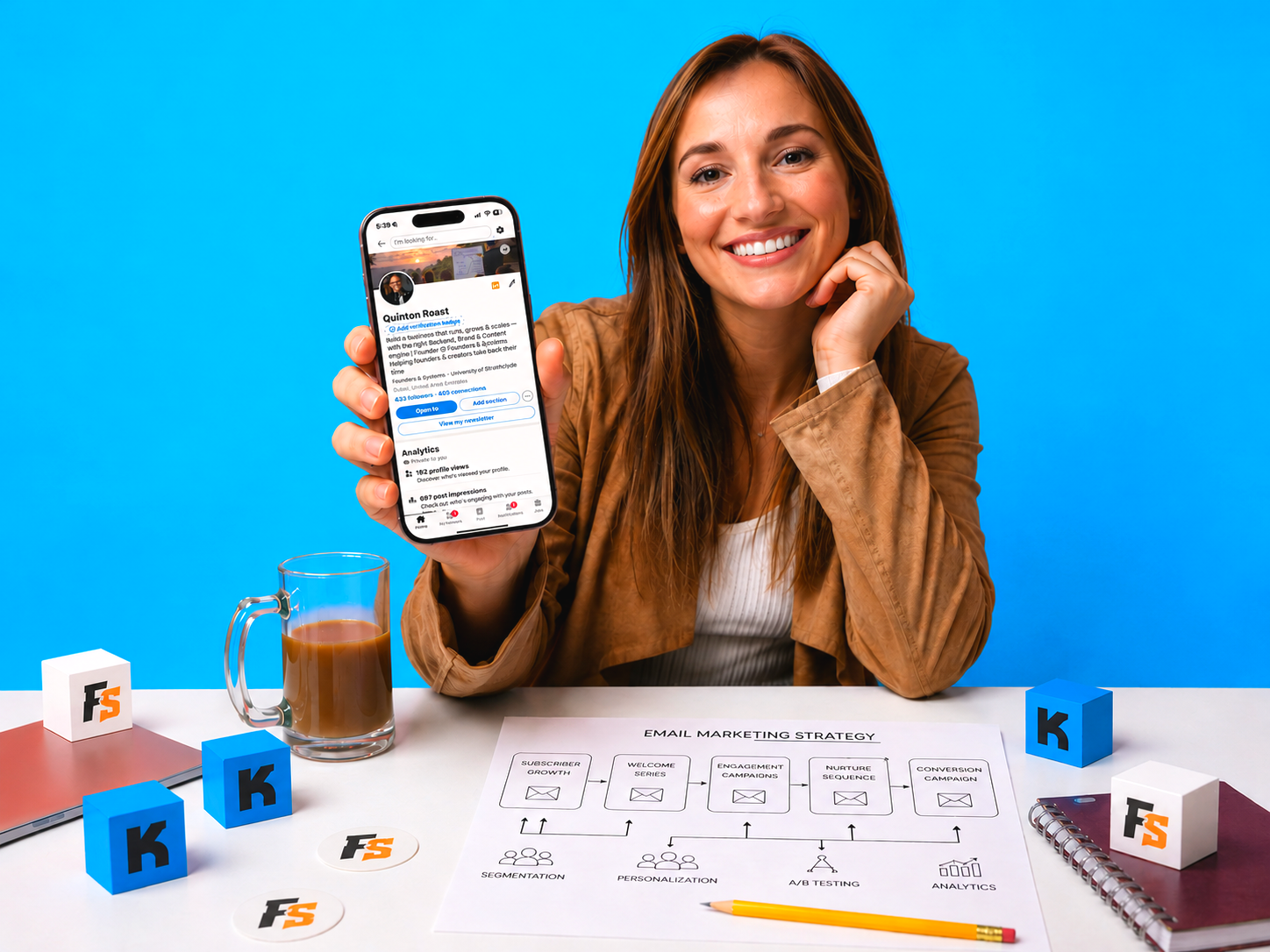
Tom Young made $329,000 in 5 months. No sales team. No funnels. No cold ads. Just him and his Instagram editor — running a business at 86 to 93% profit margins.
Taki Moore is currently doing $1.7M per month. Same model. No sales team. No webinar funnels. No cold traffic acquisition. His ad spend dropped from $60,000 a month to $7,000.
Matt Gray is doing $700,000 a month with a content system that he openly calls "boring."
These aren't outliers. They're early-mover signals.
The funnel — the thing that built the entire online business industry from 2010 to 2024 — is breaking. And the operators who already noticed are quietly running a different play.
It's called a flywheel. And once you see it, you can't unsee it.
The funnel model assumes three things that used to be true and aren't anymore.
One: cold traffic is cheap. It isn't. Meta CPMs are up across most operator niches in the last 36 months. Cold ad costs make the math on traditional funnels brutal — you need a high-ticket back end just to break even on the front end, and most operators don't have that yet.
Two: prospects trust the message. They don't. Consumer trust in marketing messages has dropped sharply since 2018. Audiences have been through the same VSL-call-pitch sequence enough times to recognise it before slide three.
Three: leads are interchangeable. They aren't. The 50/50 rule that Tom Young surfaced — out of any 100 leads, 50 will never buy and the other 50 will buy on an unknown timeline — means the funnel is fundamentally chasing the wrong thing. It chases conversion in a 14-day window. It should be staying present for a two-year horizon.
So the question changes. It stops being "how do I push more cold leads through the funnel?" and becomes "how do I stay present, compound trust, and be the obvious answer when the prospect's 'now' moment arrives?"
That's a flywheel question.
The funnel needs to be fed. The flywheel needs to be spun.
Once a flywheel has momentum, it carries itself forward. Once a funnel runs out of fuel, it stops dead.
Most "flywheel" content online stops at the metaphor. That's because the metaphor is easy and the components are the hard work. Here are the four parts every operator flywheel needs, with the moves you can run this weekend to install them.
Matt Gray runs a public stance on this: boring compounds, viral spikes don't. His $10K filter is the test — would someone pay $10,000 for this insight? If no, it's entertainment, not growth content.
The reason this matters: the flywheel needs your existing audience to consume more of you, not your audience to grow at any cost. A viral hit with the wrong audience actually damages your next several pieces of content because the algorithm uses fit-score data from your last engagement spike to decide who to show you to next.
This weekend's move: audit your last 10 pieces of content. For each one, ask — would my ideal client pay £10,000 to know this? Cut the ones that wouldn't. Replace them with three pieces that would.
Tom Young calls it the Goodwill Bank Account. Every free piece of value you ship is a deposit. Every paid ask is a withdrawal. The flywheel only spins if your deposit-to-withdrawal ratio is at least 10 to 1 — ten genuinely useful pieces of free value for every paid ask.
Cialdini's law of reciprocity isn't a sales tactic — it's a posture. The operators winning in 2026 are the ones who give so much away that the audience feels they owe a small return. When the ask eventually comes, it lands as relief, not pressure.
This weekend's move: count your last 30 pieces of content. How many were genuinely useful with no ask attached? If that number is under 27, your Goodwill Bank is overdrawn. Ship three free, useful, no-pitch pieces before your next paid offer.
Subscribe to continue reading